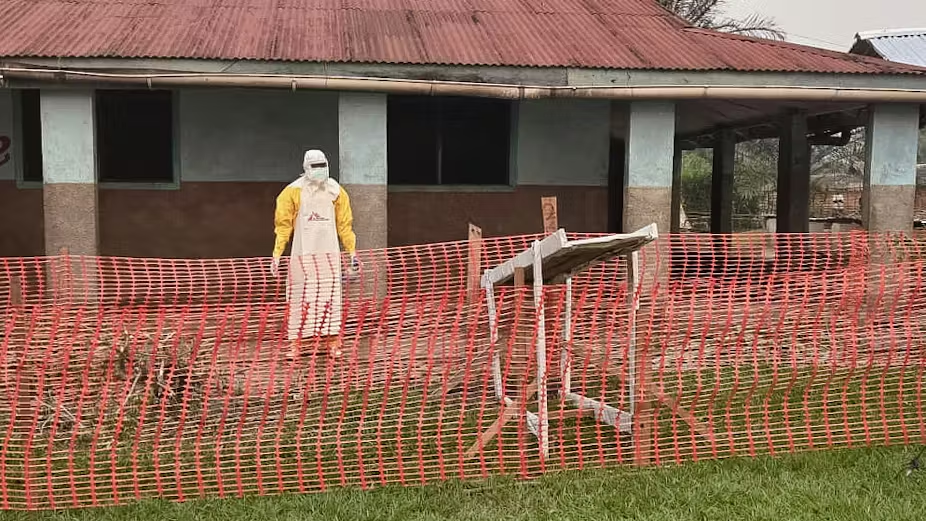
New Ebola Outbreak Declared in the Democratic Republic of the Congo: What You Need to Know
The Democratic Republic of the Congo (DRC) has officially declared a new Ebola outbreak in Kasai Province, caused by the most severe strain of the virus: the Zaire Ebola virus. This declaration has raised serious concern among health authorities worldwide, as Ebola remains one of the deadliest viral diseases known to humans.
The outbreak began on August 20 when a 34-year-old pregnant woman was admitted to hospital with Ebola-like symptoms. She died five days later. Tragically, two health workers who cared for her also became infected and lost their lives. By September 15, officials confirmed 81 Ebola cases and 28 deaths, including four health workers.
This marks the 16th Ebola epidemic in the country, following the largest in 2019 and the most recent in 2022.
How Did the Outbreak Start?
Genetic sequencing suggests this latest outbreak did not come from earlier chains of infection but instead began with a spillover event — when the virus passed from an animal host to a human. The natural reservoir of Ebola is believed to be fruit bats, but other animals such as chimpanzees, antelope, and porcupines can also transmit the virus to humans.
Spillover events typically occur when communities have direct contact with wildlife through hunting, butchering, or consumption of bushmeat. From there, human-to-human transmission spreads quickly, especially in areas with limited health infrastructure.
How Ebola Spreads and What the Symptoms Are
Ebola virus disease (EVD) was first identified in 1976 near the Ebola River in what was then Zaire (now the Democratic Republic of the Congo) and in Sudan (now South Sudan). Since then, outbreaks have repeatedly devastated African communities.
Ebola spreads through direct contact with infected blood, bodily fluids, or contaminated surfaces. The incubation period can last from two to 21 days.
Early Ebola symptoms include:
- Sudden fever
- Headaches
- Fatigue and muscle pain
- Sore throat
As the disease progresses, patients develop:
- Vomiting and diarrhea
- Abdominal pain
- Rash
- Bleeding from the gums, eyes, or under the skin
- Organ failure and shock in severe cases
Without urgent medical care, the Ebola fatality rate ranges from 50% to 90% depending on the availability of health services.
Why Ebola Outbreaks Are So Dangerous
One of the most alarming aspects of Ebola is its ability to spread rapidly in households, health-care facilities, and during traditional funerals. In some African communities, bodies of the deceased are washed and touched before burial, a practice that greatly increases transmission risk.
During the 2014 West Africa epidemic, more than 28,000 people were infected and 11,000 died. Over 800 health workers contracted Ebola while caring for patients, with two-thirds of them losing their lives.
Ebola survivors also pose long-term risks. The virus can remain in “immune-privileged” sites such as the eyes, brain, or semen for months — sometimes years. Rarely, Ebola can reactivate in a survivor and spark a new outbreak, although this is not the case in Kasai Province.
The Current Situation in the DRC
The DRC is simultaneously battling multiple health crises: a large mpox epidemic, frequent cholera outbreaks, and ongoing measles cases. The health system is already stretched thin, and conflict in parts of the country makes outbreak response even harder.
Although Kasai Province is remote, the outbreak’s proximity to Tshikapa city and the border with Angola raises concerns about wider spread. Cross-border trade and population movement could quickly escalate the situation if not controlled early.
The World Health Organization (WHO) has assessed the outbreak as high risk within the DRC, moderate risk for the African region, and low global risk.
Ebola Vaccine Provides Hope
Unlike earlier epidemics, health workers now have a powerful tool: the Ervebo vaccine (rVSV-ZEBOV). This vaccine has proven highly effective against the Zaire Ebola virus strain.
- 100% effective when given immediately after exposure
- 95% effective if administered within 12 days
- 84% effective in real-world conditions during the last outbreak in the DRC
The WHO has already delivered 400 doses of the Ebola vaccine to Kasai Province, with more shipments expected. Ring vaccination — where contacts of confirmed cases and their contacts are vaccinated — is underway, along with immunization of frontline health workers.
Containment Measures
Besides vaccination, Ebola outbreaks are controlled through:
- Early detection and isolation of suspected cases
- Contact tracing and quarantine of exposed individuals
- Safe burial practices to avoid exposure during funerals
- Strengthened hospital capacity, including field hospitals where needed
- Supportive medical care — rehydration, electrolyte balancing, and newer treatments like monoclonal antibody therapies
These combined strategies were essential in controlling the 2014 epidemic and remain the backbone of outbreak response.
Challenges Facing the Ebola Response
Despite progress, several barriers make outbreak control difficult in Kasai:
- Logistical hurdles: Ebola vaccines require cold-chain storage and safe transport into remote areas.
- Conflict and insecurity: Armed groups in parts of the DRC restrict access for health teams.
- Mistrust of authorities: Rumors and misinformation often lead communities to reject vaccines or hide sick relatives.
- Resource strain: With multiple diseases spreading, supplies and staff are already overstretched.
Unless these challenges are overcome, even the best medical tools may not stop transmission completely.
The Role of Technology and AI
New tools like EPIWATCH, an AI-driven surveillance platform, are proving useful for early outbreak warnings. By scanning news, social media, and online reports, EPIWATCH detected a spike in unusual illness reports in Kasai weeks before the WHO officially confirmed the outbreak.
While these signals don’t replace laboratory tests, they can alert authorities faster, helping to contain outbreaks before they spiral out of control.
What Happens Next?
The next few weeks will be crucial. If ring vaccination, isolation, and contact tracing succeed, this outbreak could remain localized. But delays in response, coupled with limited resources and local resistance, risk allowing Ebola to spread further.
For the people of Kasai, the stakes are high. As the Democratic Republic of the Congo faces yet another health crisis, international support will be vital to contain the virus and prevent another large-scale epidemic.
Conclusion
The Ebola outbreak in Kasai Province highlights both the progress and challenges in global health. On one hand, the availability of the Ebola vaccine and improved surveillance tools gives humanity its best chance yet to stop Ebola quickly. On the other, weak health systems, poverty, and mistrust continue to fuel transmission.
The world cannot afford to ignore this crisis. Each Ebola outbreak is a reminder that infectious diseases do not respect borders. With swift action, adequate resources, and community cooperation, this epidemic may be contained. But without these, the Zaire Ebola virus could once again spread fear and devastation far beyond Kasai.